AI-SLN
AI support for the surgeon during sentinel lymph node biopsy in endometrial cancer

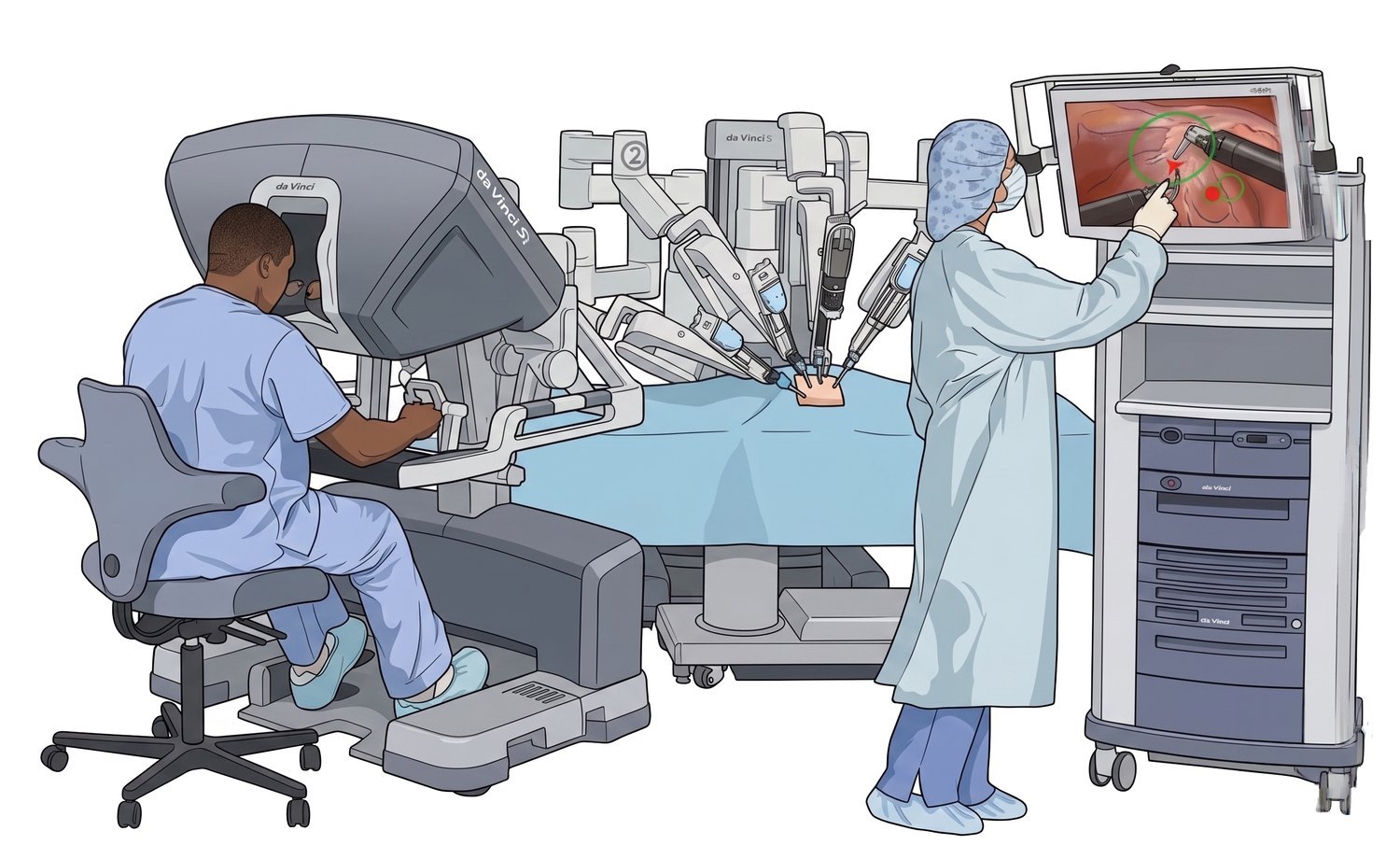
In endometrial cancer surgery, the sentinel lymph node (the first node that drains the tumour) is found by injecting indocyanine green (ICG), a dye that glows under near-infrared light. Sometimes the tissue removed as “sentinel node” turns out, at the microscope, to contain no lymph node at all. AI-SLN analyses the surgical videos to help the surgeon recognise lymph node tissue and reduce these empty samples. It is a collaboration between the Department of Computer Science and Engineering of the University of Bologna and the Gynecology unit of the IRCCS Sant’Orsola Polyclinic.
three questions for the AI
When does the sentinel node appear?
Find the moment in the video when the lymph node becomes visible. Drag the slider through a real sequence of 80 frames: the amber line shows how much ICG fluorescence each frame contains, measured from the images.
0%of video sequences with the right moment found, with a mean error of about three seconds.
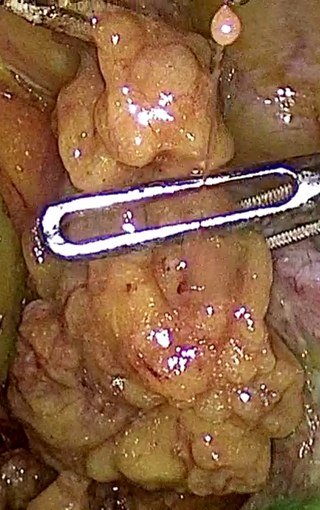
Is the node involved?
Distinguish lymph nodes with metastases from disease-free ones, looking only at the intra-operative image, before the histopathological result is available.
0PR-AUC (area under the precision-recall curve, 1 is perfect) in separating metastatic from disease-free nodes.
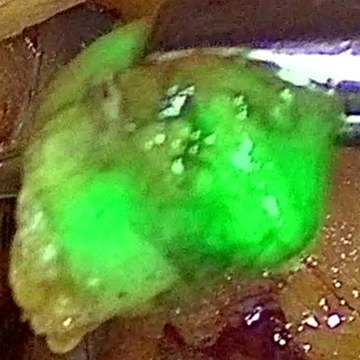
How many nodes are in the tissue?
Estimate the number of lymph nodes contained in the removed tissue from its fluorescence image, and compare it with the count from the pathologist.
0%of cases estimated within one node of the histopathological count (mean error 1.39 nodes).
approach
No pre-trained model exists for this kind of image, so we compared medical foundation models (LemonFM, MedSigLIP, MedGemma) and segmentation and tracking models, with training and data augmentation designed for small case series. Everything runs on local infrastructure, as required by the ethics protocol. A journal article is in preparation, with release of the source code (the clinical data cannot be shared). The project also supported Paint It, Black, a benchmark for clinical document de-identification accepted at EMNLP 2026 and co-authored with the clinical partners.
Project website: disi-unibo-nlp.github.io/ai-sln